Case study · 2015 – 2016
Rage Communication — first UX role, learning craft by doing.
Usability testing existing flows, building behavioural personas, redesigning the parts of the journey users dropped out of.
- Period
- Jun 2015 – Jul 2016
- Role
- Junior UX Designer
- Tags
- BankingConsumerUsability testingFoundational
My first UX role. I joined Krishana's DDH team at Rage Communications in 2015 — an independent design team focused on usability testing and interaction design for client products, mostly in retail banking.
I came in from a year of technical support, where most tickets were people drowning in complex software. Rage was where I learned to study that drowning systematically — running interviews, mapping the pain, then designing the screen that fixed it. The bulk of my work was on Citibank's Indian mobile banking app: usability testing the existing experience, building personas across demographics, and reworking the sign-on, account, credit-card, and merchant flows.
Role & scope
Junior UX Designer — apprentice on a small senior team, learning craft by doing.
- 01Running usability tests on existing client products and synthesising findings into design recommendations.
- 02Conducting user interviews across Indian banking demographics; building behavioural personas.
- 03Card-sorting sessions and IA analysis to restructure the flows being tested.
- 04Designing wireframes and interaction patterns under senior design review.
- 05Sitting in on stakeholder workshops with client teams (Citibank, etc.) — listening more than talking, but in the room.
Designing for banking across demography user journeys taught me to solve for complex flow and user day-to-day task.
Selected projects
Most of the work was Citibank India's mobile banking app, broken into the flows that needed UX attention. The exercise was always the same: usability-test what exists, find where users get stuck, redesign that piece, validate. One e-commerce project (Wedding & MarryGold) closed out the year.
01
Citibank Mobile App India · Sign-On & Account
Reworking the parts of the journey users were dropping out of: sign-on and account summary.
Citibank Mobile App India · Sign-On & Account
Reworking the parts of the journey users were dropping out of: sign-on and account summary.
Context
Citibank's Indian mobile banking app was losing users at sign-on and confusing them at the account summary. Friction at the front door of a banking app is the most expensive kind.
UX angle
Friction at the front door of a banking app is the most expensive kind — the user is right there, intending to use the app, and the UI gets in the way. Usability-testing those exact moments is where the design recommendations earn their cost.
Approach
Sat in on usability sessions with Indian banking customers under senior supervision. Identified the moments where the UI assumed too much (terminology, unfamiliar inputs, hidden state). Wireframed each step around what users actually did, not what the spec said they would.
What I learned
You can't redesign a screen well without watching someone use the broken version. Every change that worked traced back to a session; every one that didn't, skipped that step.
02Citibank Credit Card Loan
A UX-best-practice pass on the online credit-card application journey.
Citibank Credit Card Loan
A UX-best-practice pass on the online credit-card application journey.
Context
Online credit-card applications are where banks lose qualified applicants in the form. Citibank wanted a UX-best-practice pass before the next development cycle.
UX angle
UX audits often end up as long lists of issues that nobody acts on. The interesting half of an audit is the prioritisation — which findings actually move the needle, and which dev cost is worth paying for which.
Approach
Built a checklist of best-practice patterns (progress indication, smart defaults, conditional fields, low-friction input types). Audited every step, scored it, then prioritised changes by expected drop-off impact vs. dev cost.
What I learned
An audit without prioritisation is research, not design. The forcing function of "which of these would you do first" is what turns findings into decisions.
03Citibank Merchant Engagement Form
Wireframing a simpler merchant onboarding form for Citibank's commercial side.
Citibank Merchant Engagement Form
Wireframing a simpler merchant onboarding form for Citibank's commercial side.
Context
Merchant onboarding for Citibank had grown into a long, branchy form that asked for everything up front. Merchants were giving up partway through.
UX angle
Long forms aren't long because they have to be. They're long because every team that owns a field is afraid to defer it. The UX work is in deciding what's actually required to continue — and giving the user a sense of distance left.
Approach
Broke the form into the smallest meaningful steps. Deferred any field not strictly required to continue. Added a clear progress indicator so merchants knew the end was in sight.
What I learned
Progress indication isn't a decoration; it's a feature. People will tolerate a long form if they can see it ending.
04Citibank · Scan Information
An update flow that let customers scan a card to update their info without retyping.
Citibank · Scan Information
An update flow that let customers scan a card to update their info without retyping.
Context
Updating card information in the app meant retyping a 16-digit number on a phone keyboard. Most people didn't bother.
UX angle
The biggest UX wins are sometimes choosing the right input method, not redesigning the screen. Asking users to retype a 16-digit number on a phone keyboard is the design problem. Scan is the design solution.
Approach
Designed scan as the default and manual as the fallback (most users never see manual). The verify-and-edit step lets users correct what OCR got wrong without restarting.
What I learned
Design for the path of least resistance, then handle errors gracefully on that path. A scan flow is only as good as its recovery from a misread.
05
Wedding & MarryGold
An e-commerce redesign — a pivot away from banking work for the year.
Wedding & MarryGold
An e-commerce redesign — a pivot away from banking work for the year.
Context
An e-commerce site for the Indian wedding market — a category where shoppers research for weeks and convert in minutes. The existing site treated everyone like a casual browser.
UX angle
E-commerce in the wedding category isn't one user mode. The same person spends weeks researching, then converts in minutes. A single surface has to serve both modes without making either feel second-class.
Approach
Designed for two distinct modes: long research sessions (deep filters, save-for-later, comparison) and conversion sprints (clear price, low-friction checkout). The homepage had to serve both, with neither shouting over the other.
What I learned
Sometimes one surface needs to flex between user modes. Designing two parallel paths is often cleaner than trying to predict which mode a visitor is in.
What this first role taught me
- LESSON 01
Watch a real user before drawing a real screen.
Every redesign that worked started with someone struggling in a usability session. Every one that didn't work skipped that step.
- LESSON 02
Junior is the time to be precise about craft.
Wireframe quality, annotation discipline, file hygiene — none of it is glamorous, all of it compounds. I'm still drawing on muscle memory built here.
- LESSON 03
Banking is a great UX classroom.
The constraints (compliance, low connectivity, low literacy on first-time users) force you to design for the actual user, not the imagined one.
- LESSON 04
Listen in the room before you talk in it.
Senior people in stakeholder workshops weren't winning by speaking more — they were winning by hearing the disagreement everyone else missed. That's a skill you can practice.
Read more here.
Moments
First UX role, DDH team. People I learned the craft from.
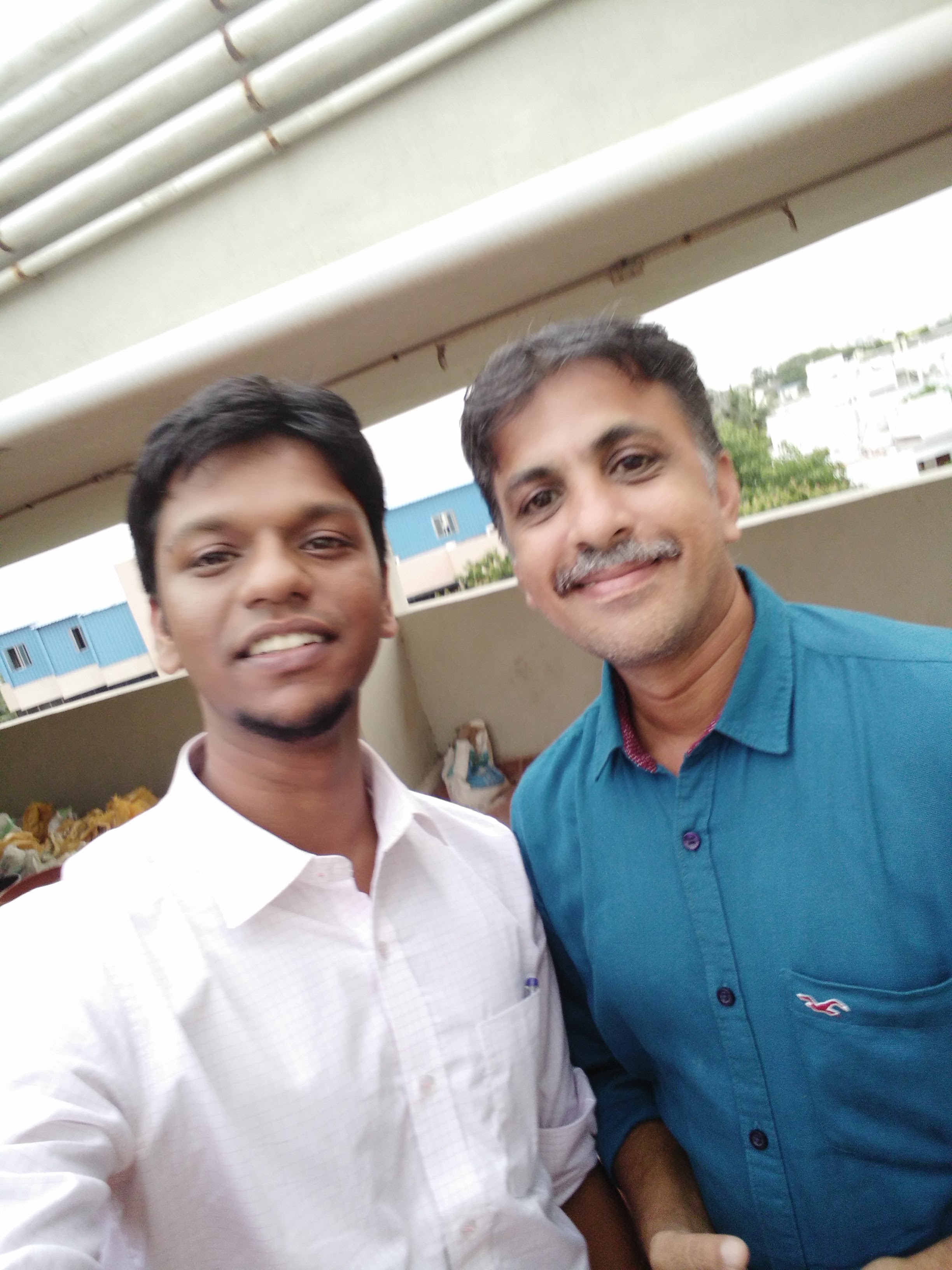
With Chella, lead UX designer. 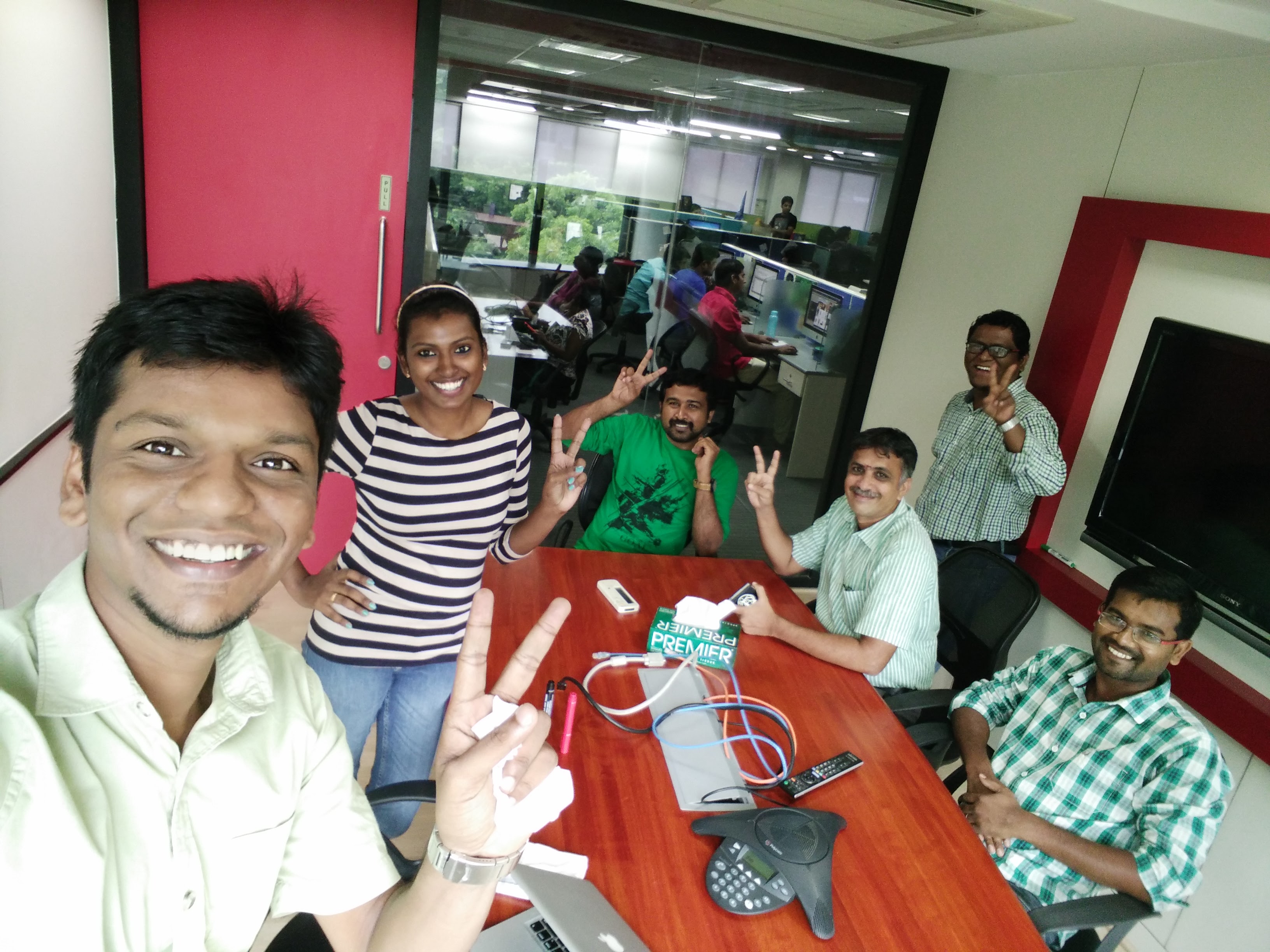
The DDH team at Rage. 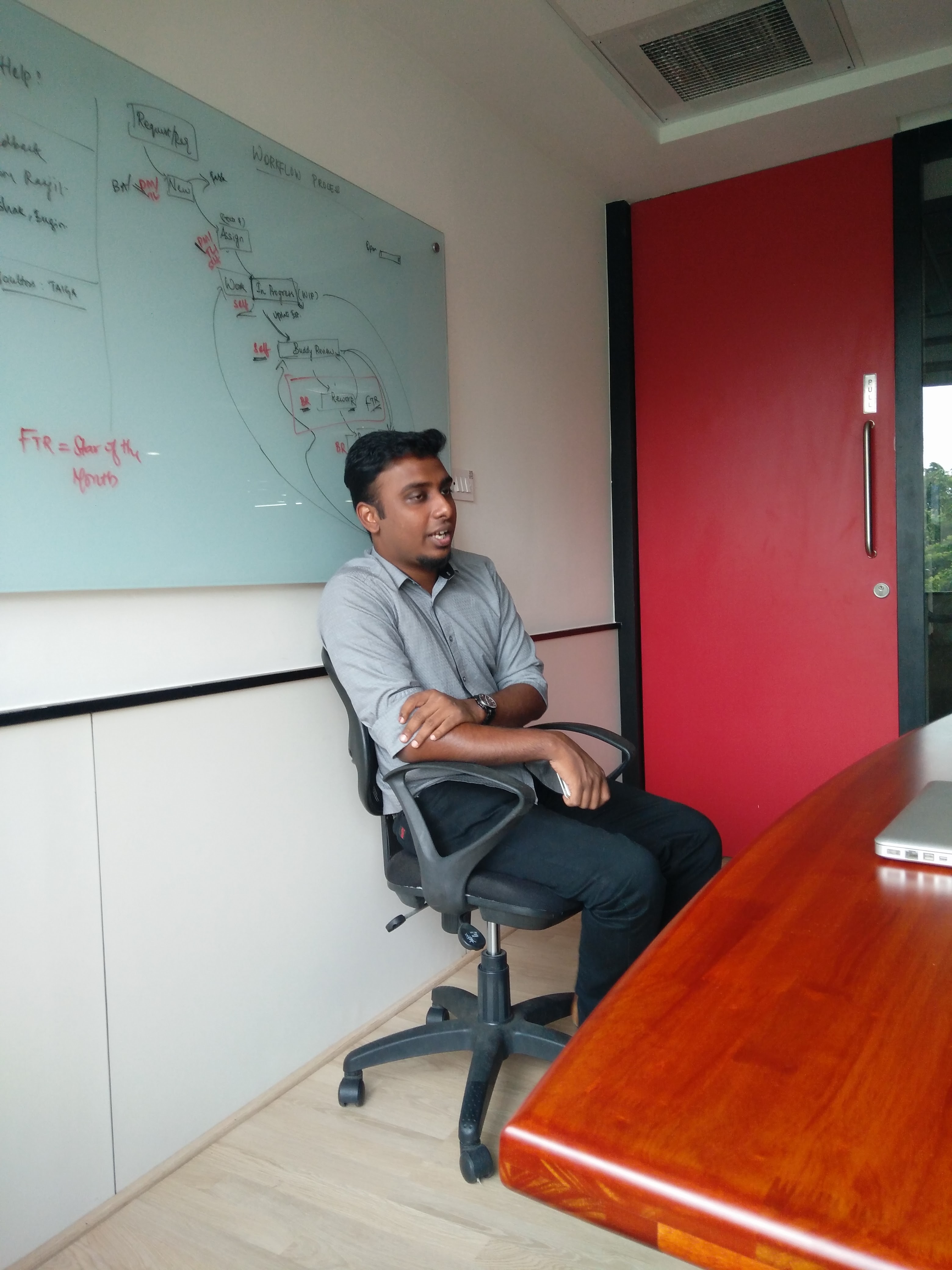
With Krishanan, UX manager. 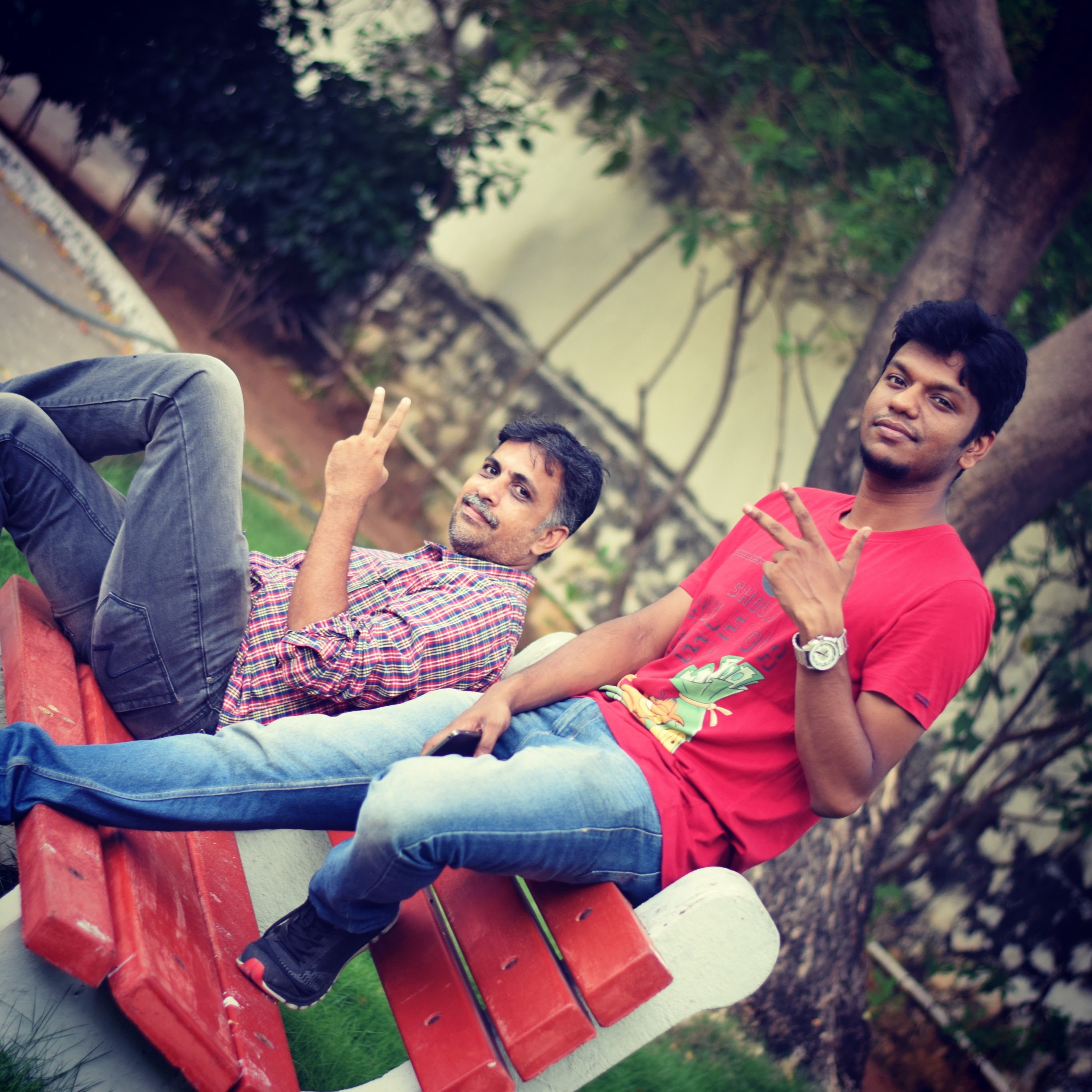
Team outing and bonding. 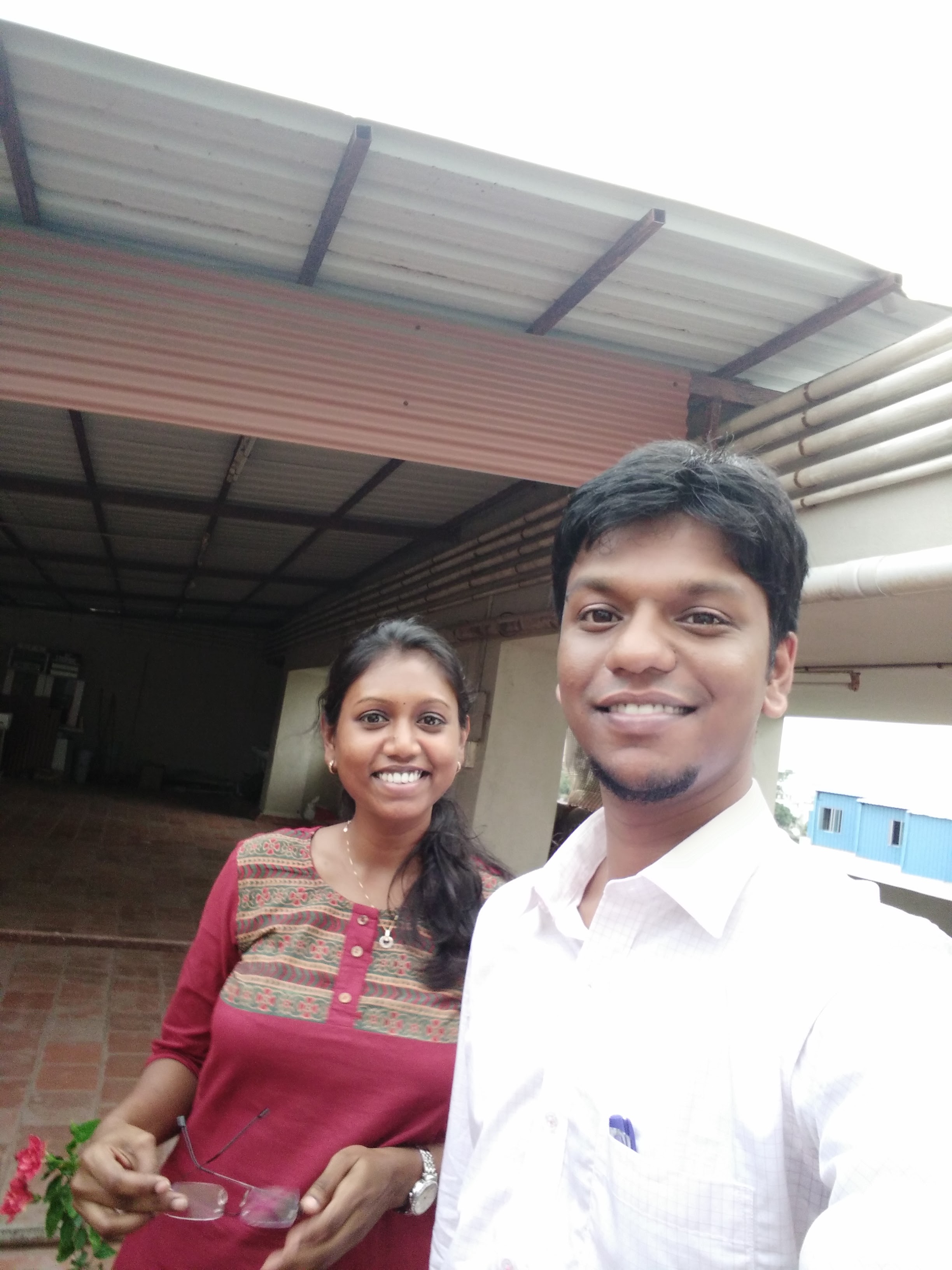
With Mitra, business analyst.